Skip to content
Tool & Equipment Tracking Comparison

AlignOps ToolWatch vs Tenna

Both platforms track assets across jobsites. But if your headache is tools walking off the crib and warehouse teams flying blind, that's a different problem than idle heavy iron. Here's how ToolWatch and Tenna actually diverge — and which one fits how your warehouse, field crews, and finance team really operate in 2026.

Construction Warehouse

Tool Crib Control vs. Fleet Telematics — Choosing the Right Fit

If you manage tools and equipment for a construction or industrial operation, you've likely come across Tenna in your search — it's one of the more recognized names in GPS and telematics tracking. But "nobody knows where anything is" and "nobody trusts the equipment utilization data" are two different complaints, and they call for two different tools. Tenna built its platform around heavy-equipment utilization, OEM data feeds, and dispatch across mixed fleets. ToolWatch stayed focused on asset management — issuing, returning, transferring, and restocking tools and consumables, with built-in procurement so your warehouse team isn't chasing purchase orders by hand. This page breaks down where each platform is genuinely the stronger choice, so your team can decide based on how your operation actually runs — not just feature-list length.

ToolWatch Mark

What is AlignOps ToolWatch?

AlignOps ToolWatch is an asset and inventory management platform built for the day-to-day realities of running a tool crib: checking tools in and out, tracking who has what and for how long, scheduling maintenance, and keeping consumables stocked so a shortage never stalls a jobsite. It gives warehouse and field teams real-time visibility using barcode, GPS, and Bluetooth tracking feeding one centralized dashboard, and it connects straight into procurement — purchase requests, approvals, and purchase orders — so restocking happens before crews run short. And because tracking isn't tied to a single hardware vendor, ToolWatch works across mixed-brand tool and equipment fleets on any jobsite.
Tenna logo mark

What is Tenna?

Tenna is a construction technology platform focused on GPS and telematics tracking for mixed equipment fleets — from heavy iron down to tools and attachments. It uses IoT trackers and OEM data feeds to surface engine hours, utilization, and fault codes in one app, along with preventive maintenance alerts and work order management. Tenna also offers construction-specific dispatch features, including resource request boards and drag-and-drop scheduling, aimed at reducing idle equipment and unnecessary rentals — useful if your Fleet or Ops Manager's biggest cost driver is underutilized machinery, not lost tools. FleetWatcher, part of AlignOps’ product suite, offers similar equipment and equipment management features.

AlignOps ToolWatch vs Tenna at a Glance

Category
ToolWatch
Tenna
Primary focus

Tool crib, warehouse & consumables

GPS/telematics for heavy equipment & mixed fleets

Best for

Active toolrooms, high tool volume, cross-jobsite logistics

Heavy-equipment utilization & dispatch

Tagging & hardware

QR, RFID, BLE, GPS — vendor-agnostic

Proprietary GPS/BLE trackers

Procurement & vendor management

Built-in requisitions, auto-POs, vendor workflows

Limited

OEM telematics data

Limited

Engine hours, fault codes, utilization

Dispatch & scheduling

Not a core focus

Resource request boards, SMS dispatch

Accounting integrations

Sage 300 CRE, Viewpoint Vista, Procore, Autodesk Construction Cloud

Varies by integration partner

Pricing model

Asset-based, unlimited users included

Tiered (TennaMINI / TennaPLUS); custom quote

Entry-level pricing

Published starting band, ~$2,520/year

Custom quote only

If your daily fire drill is "where did that tool go" and your monthly reports show dollar loss on missing assets, the left column is where you'll spend your time. If your Fleet Manager's fire drill is idle iron and OEM fault codes, the right column matters more.


Where ToolWatch and Tenna actually diverge

Both platforms cover the basics — asset tagging, location tracking, maintenance alerts. The real differences show up in depth: how far each one goes once a tool leaves the crib, once equipment needs OEM-level data, or once a restock needs a purchase order behind it.

Tool & Equipment

Tool & Equipment Tracking

ToolWatch supports QR, RFID, BLE, and GPS tagging with full check-in/check-out workflows. Tenna's tagging and check-in/check-out capabilities are moderate — its strength is GPS location tracking.
Vendor Mgt

Procurement & Vendor Management

ToolWatch includes built-in requisitions, auto-POs, and vendor management so restocking happens before a shortage hits the field. Tenna's procurement and vendor workflows are more limited, without native requisition or auto-PO tools.
memo

Maintenance & Work Orders

Both platforms handle preventive maintenance scheduling and work order management. Tenna goes deeper on OEM fault and engine-hour data; ToolWatch goes deeper on repair and condition tracking.
Telematics

Telematics & Dispatch

This is Tenna's clearest advantage — resource request boards and SMS/drag-and-drop dispatch built for allocating heavy equipment across jobs. ToolWatch doesn't focus on dispatch scheduling.
Accounting

Accounting & Integrations

ToolWatch has established connections to Sage 300 CRE, Viewpoint Vista, Procore, and Autodesk Construction Cloud. Tenna's accounting integrations vary by partner and are moderate for platforms like Procore and Autodesk.
Mobile Experience

Mobile Experience

Both platforms offer offline functionality and photo/condition capture. ToolWatch supports iOS and Android equally; Tenna's iOS experience is strong, but Android has been a recurring gap for users.

Pricing Comparison

ToolWatch's published starting band gives finance teams a real number to plan around before a sales conversation. Tenna requires a custom quote in every case — cost depends on fleet size and the specific hardware/tracker mix required, so there's no self-serve way to estimate cost upfront. Some ToolWatch users report costs increasing as accounts add features over time, so confirm what's included in your quoted tier either way.

 
ToolWatch
Tenna

Pricing model

Asset-based, scales with tools/equipment managed

Tiered (TennaMINI / TennaPLUS)

Starting price

 ~$2,520/year

 Custom quote only

Quote required?

No — starting band published upfront

Yes — sales call required regardless of fleet size

Users included

Unlimited

Varies by quote

Mobile access & training

Included

Varies by quote

Cost drivers

Number of tools/assets managed

Fleet size, hardware/tracker mix


ToolWatch's published starting band gives finance teams a real number to plan around before a sales conversation. Tenna requires a custom quote in every case — cost depends on fleet size and the specific hardware/tracker mix required, so there's no self-serve way to estimate cost upfront. Some ToolWatch users report costs increasing as accounts add features over time, so confirm what's included in your quoted tier either way.

ToolWatch Logo Mark

Where AlignOps ToolWatch is the Better Choice

For contractors, tools and consumables are the daily headache — not equipment utilization — and ToolWatch is built around check-in/check-out, transfers, repairs, and requisition-driven restocking, rather than adapted from a general telematics platform. Built-in procurement matters here too: requisitions, automated purchase orders, and vendor management keep the warehouse ahead of shortages, so crews aren't waiting on tools mid-project and delays don't pile up. Hardware flexibility is another factor, with QR, RFID, BLE, and GPS tagging available without being locked into one tracker vendor or ecosystem. Contract terms are worth weighing as well — Tenna reviewers report automatic renewals and no refunds on cancellation, which stands in contrast to ToolWatch's published starting pricing. And for job costing, deep accounting integrations matter, with ToolWatch offering established connections to Sage 300 CRE, Viewpoint Vista, Procore, and Autodesk Construction Cloud.
Tenna

Where Tenna is the Better Choice

For contractors where heavy equipment is the primary asset class, Tenna's OEM data feeds — engine hours, fault codes, utilization — give a level of equipment-health detail that a tool-crib-first platform isn't built to match. Dispatch and scheduling are often a daily bottleneck as well, and resource request boards and SMS-based dispatch help allocate equipment across jobs while cutting down on idle iron and unnecessary rentals. For fleets where the biggest cost driver is underutilized heavy equipment rather than lost tools or restocking delays, this focus pays off directly. AlignOps FleetWatcher offers the same fleet and equipment insights. Support experience matters too, and reviewers consistently point to Tenna's onboarding and troubleshooting support as a strength. Worth noting: this comparison is scoped to ToolWatch's tool-crib focus rather than to Tenna specifically. For heavy-equipment telematics needs, AlignOps FleetWatcher is also purpose-built for fleet and asset tracking, and is worth evaluating alongside — or instead of — third-party platforms like Tenna.

Which Should You Choose? 

If the pain is tools and consumables, choose ToolWatch. If the pain is heavy-equipment utilization and dispatch, weigh AlignOps FleetWatcher alongside Tenna.

Choose ToolWatch if: you run an active tool crib with high tool volume, consumables moving between warehouse and jobsites, and you want built-in procurement plus vendor-agnostic hardware. This is the fit when the warehouse needs an organized operation, field teams need the right tools available, and finance needs job-costing data that flows straight into Sage, Viewpoint, Procore, or Autodesk Construction Cloud.

Choose Tenna if: your priority is GPS/telematics visibility and dispatch across a large, mixed heavy-equipment fleet, and OEM-level utilization data matters more than tool crib workflows. This fits operations where the biggest line-item is idle equipment and rental spend, not tool shrinkage. Contractors already in the AlignOps ecosystem should weigh AlignOps FleetWatcher against Tenna here as well, since FleetWatcher covers the same fleet-telematics need natively.

Larger contractors managing both a tool crib and a heavy-equipment fleet often run ToolWatch for tools and consumables alongside a dedicated equipment telematics platform — such as AlignOps FleetWatcher — since the two solve different problems rather than competing head-to-head everywhere.

FAQ's

ToolWatch is purpose-built for tool crib and warehouse operations — issuing, returning, transferring, and restocking tools and consumables across jobsites, with built-in procurement and vendor management. Tenna is built around GPS and telematics tracking for heavy equipment and mixed fleets, with OEM data feeds and dispatch scheduling. They solve related but different problems.

For contractors with active tool cribs, high tool volume, and cross-jobsite logistics, ToolWatch is generally the better fit because of its check-in/check-out workflows and built-in procurement. Tenna is a stronger fit for contractors prioritizing heavy-equipment utilization and dispatch across a mixed fleet.

Tenna can track consumable quantities, but its procurement and vendor management workflows are limited compared to platforms built specifically around tool crib operations, such as ToolWatch.

Tenna can be a good fit if your priority is GPS/telematics visibility and dispatch across a large, mixed heavy-equipment fleet. If your priority is tool crib operations — check-in/check-out, transfers, repairs, and requisition-driven restocking — ToolWatch is built specifically for that use case.

Tenna uses a tiered model (TennaMINI for smaller fleets, TennaPLUS for larger, more complex fleets) that requires a custom quote from Tenna's sales team. ToolWatch uses asset-based pricing that scales with the number of tools and equipment managed, with unlimited users included, and published starting prices for smaller asset counts.

Take Control of Your Operations Today

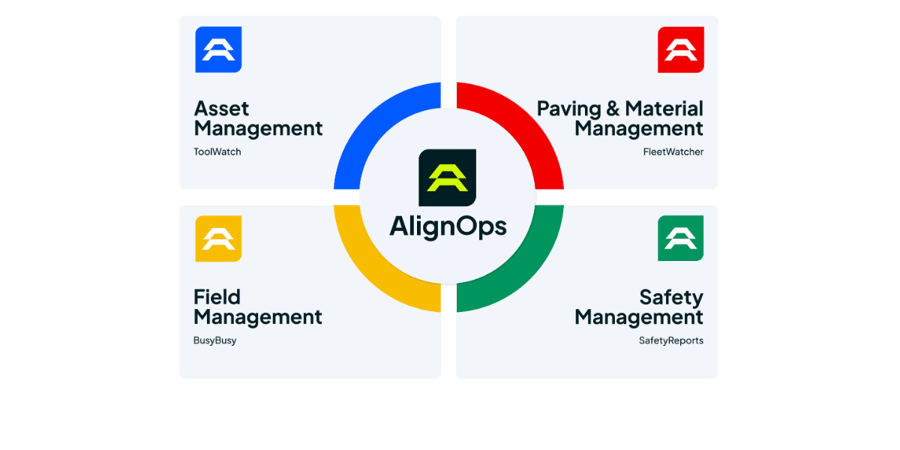
AlignOps delivers the real-time data you need to optimize your field, fleet, assets, and risk management—guaranteeing proven ROI on every job.
alignops products-2