If your crews are working outside this summer, there’s a good chance OSHA is paying closer attention than ever before. Heat safety has quickly become one of OSHA’s biggest enforcement priorities, and inspectors are already increasing jobsite visits tied to high temperatures and heat-related hazards.
Under OSHA’s updated National Emphasis Program, inspections can now be triggered during local heat advisories or on days where the heat index reaches 80°F or higher — especially in construction, road work, roofing, utility work, and other physically demanding outdoor industries. And when OSHA shows up, they’re not just looking for a water cooler and a pop-up tent. They’re looking for proof: documented inspections, heat safety training, acclimatization procedures for new workers, incident reporting, corrective actions, and evidence that supervisors are actively managing heat risks on site.
.png?width=2048&height=1122&name=heat%20safety%20%20(1).png)
The companies that are prepared won’t just be the ones trying to keep workers cool — they’ll be the ones able to prove they’re doing it consistently.
The good news is that most contractors don’t need to completely reinvent their safety program to stay ahead of these inspections. In many cases, it comes down to creating better consistency, improving documentation, and making heat safety part of the daily workflow on every jobsite.
Strong safety programs don’t rely on informal conversations or scattered paperwork — they create repeatable processes for inspections, training, JSAs, observations, incident reporting, and corrective actions. Digital safety tools can help contractors standardize and document these efforts across crews and projects before OSHA ever steps on site.
Here are eight specific things contractors should do right now to strengthen their heat safety program and improve inspection readiness.
1. Create Heat-Specific Jobsite Inspections
One of the first things OSHA inspectors will look for is whether your company has a documented process for identifying and managing heat risks on-site. That means more than just telling crews to “drink water and take breaks.” Strong safety programs should include regular heat-related inspections to verify water availability, access to shade, rest areas, cooling stations, emergency contacts, and whether supervisors are monitoring crews for signs of heat stress.
Digital inspection tools can help standardize these checks across jobsites while creating time-stamped documentation that demonstrates proactive heat safety management — not just reactive response after an incident occurs.
2. Conduct Daily Heat Safety JSAs
Heat hazards can change dramatically depending on:
- temperature,
- humidity,
- workload,
- direct sunlight,
- PPE requirements
- crew experience levels
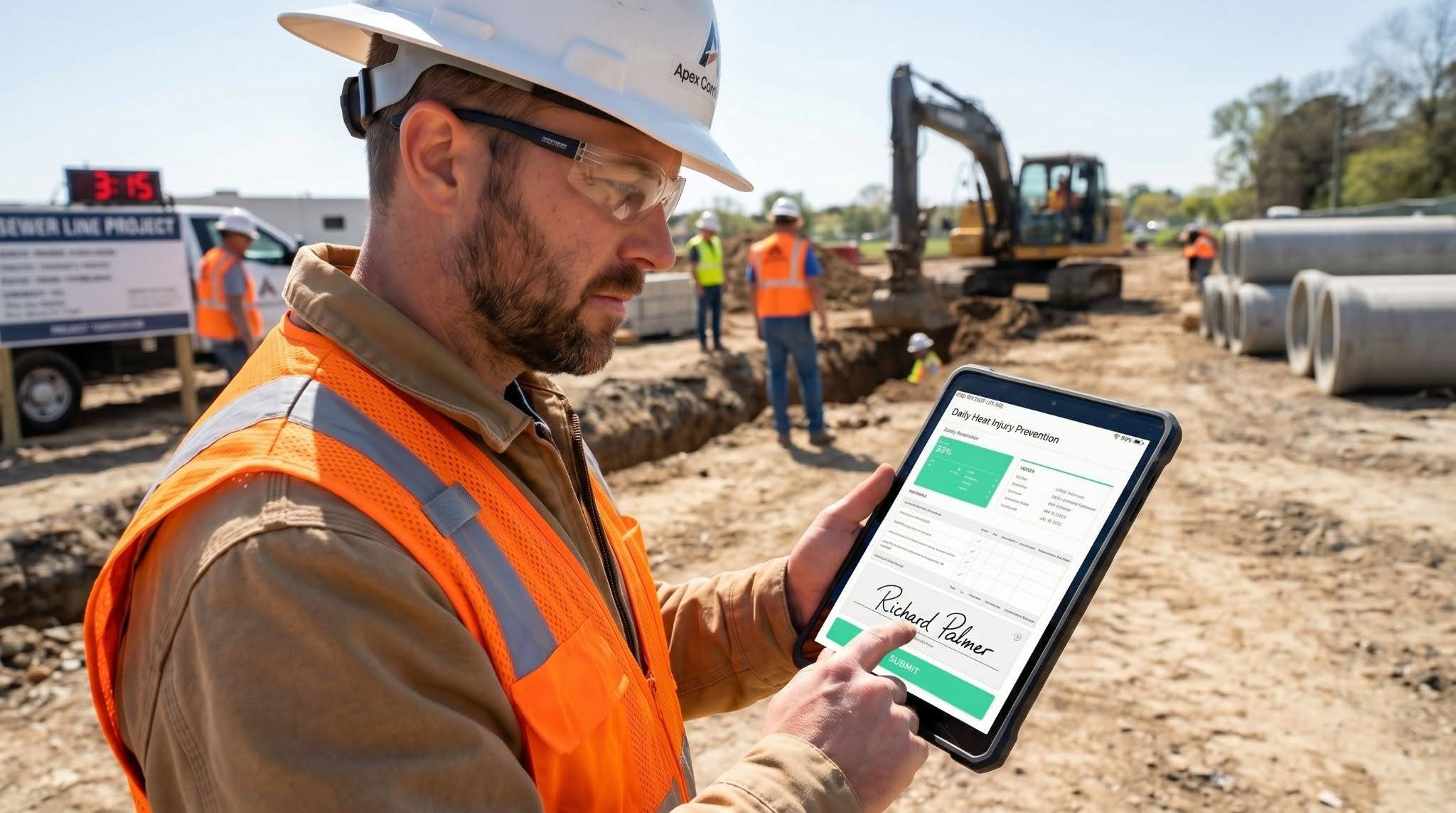
That’s why strong safety programs should include daily pre-task planning discussions that specifically address heat-related risks before work begins.
For many contractors, that means incorporating heat safety directly into Job Safety Analyses (JSAs) or pre-task plans. Supervisors should review things like:
- expected temperatures,
- water and shade locations,
- break schedules,
- emergency procedures,
- acclimatization for new workers,
- and signs of heat illness with crews before work starts.
Documented JSAs help create consistency across projects while also demonstrating that heat hazards were actively discussed and evaluated before work began.
3. Document Water & Shade Station Checks
OSHA’s updated heat enforcement guidance repeatedly calls out access to cool water and shaded rest areas. The problem for many contractors is proving that those stations were actually maintained throughout the day.
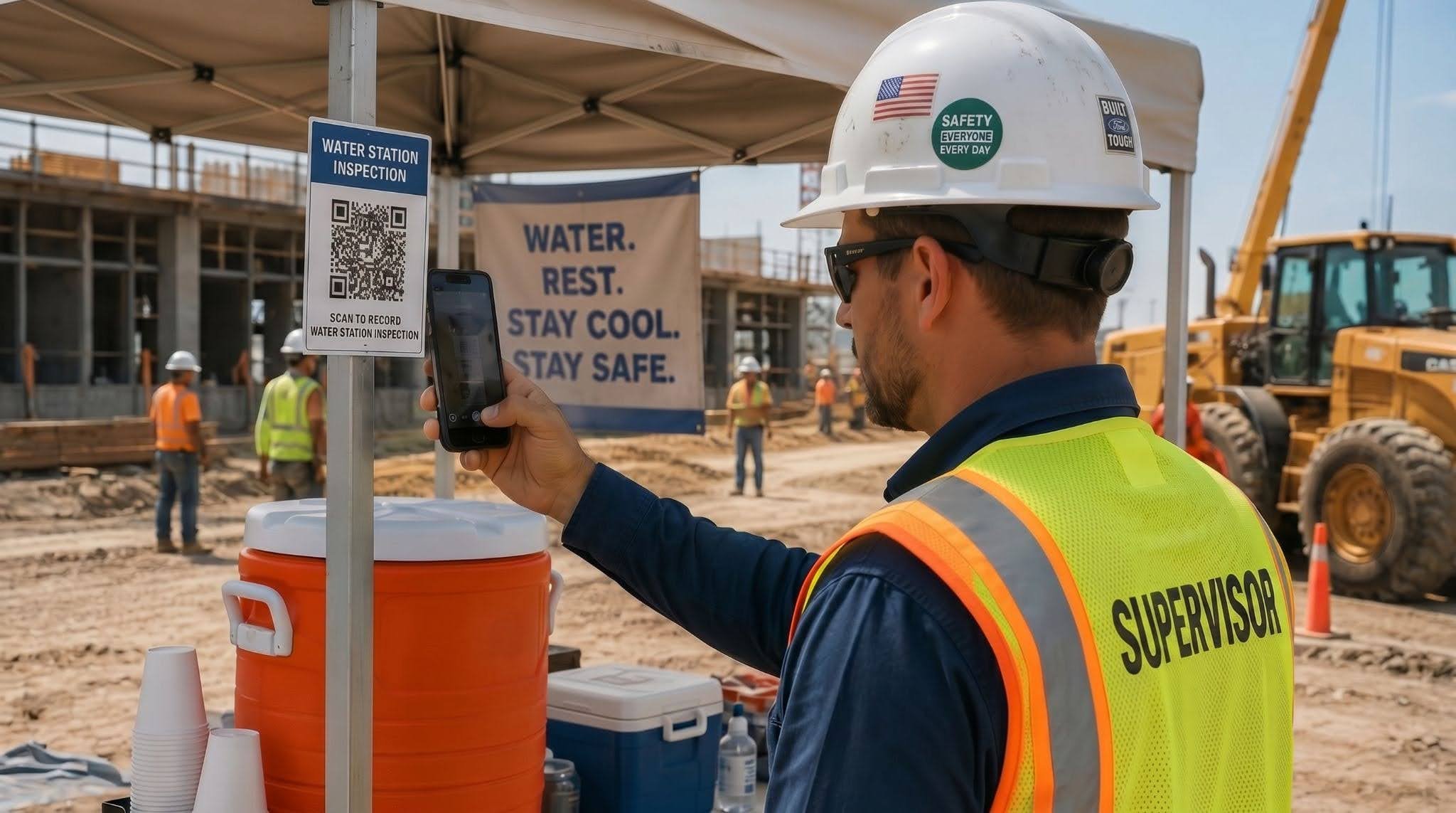
One simple way companies can improve accountability is to use QR codes or scan points at hydration stations, cooling tents, or shaded break areas. Supervisors can quickly scan and document inspections, restocking, or maintenance checks directly from their phones.
Not only does this help reinforce consistency in the field, but it also creates a digital trail showing that water and recovery areas were actively monitored throughout the workday — exactly the type of documentation OSHA is increasingly expecting to see.
4. Encourage Employees to Report Heat Hazards Immediately
A lot of heat-related problems start small: empty water coolers, missing shade tents, skipped breaks, or employees pushing themselves too hard in extreme heat. The faster those issues get reported, the easier they are to fix before someone gets hurt.
Strong safety programs should make it easy for employees to report unsafe heat conditions directly from the field. Workers should be able to quickly document concerns like missing water, overheating symptoms, excessive workloads, or supervisors bypassing heat protocols using photos, notes, and mobile reporting tools.
This helps create a stronger safety culture while also showing OSHA that employees are actively involved in identifying and correcting hazards — something the agency is placing a growing emphasis on during inspections.
5. Deliver & Track Heat Safety Training
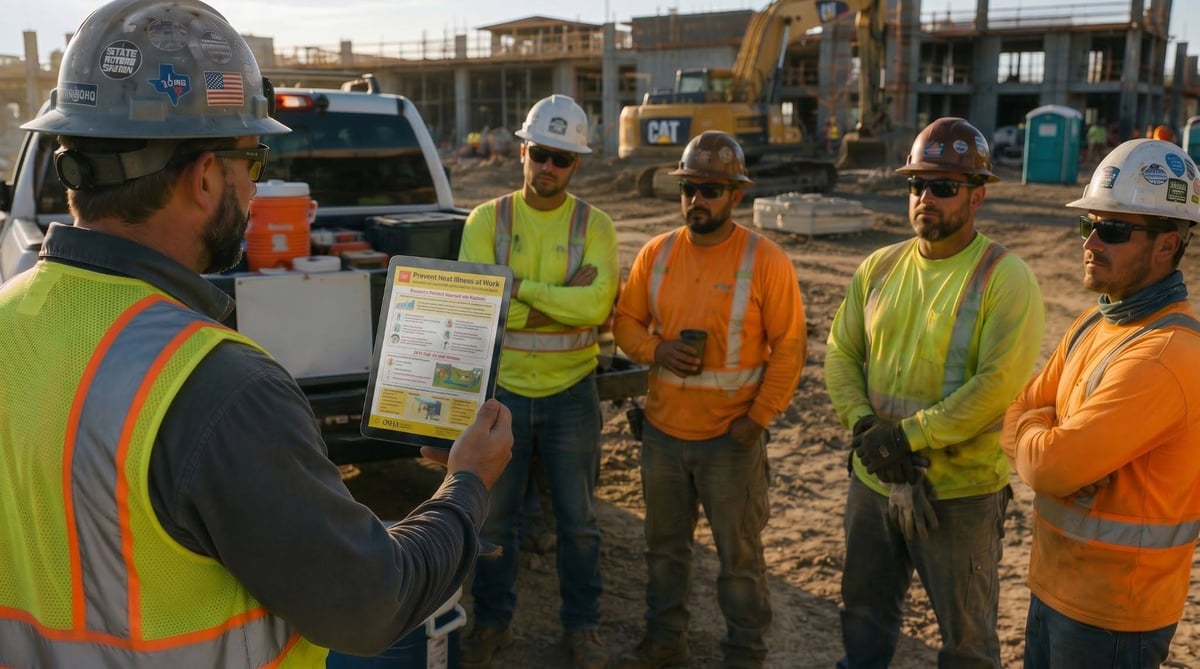
OSHA is putting major focus on heat safety training, especially for new employees and workers returning after time away from the job. Inspectors are increasingly asking companies to prove workers were trained on heat illness symptoms, hydration, emergency response procedures, and acclimatization practices.
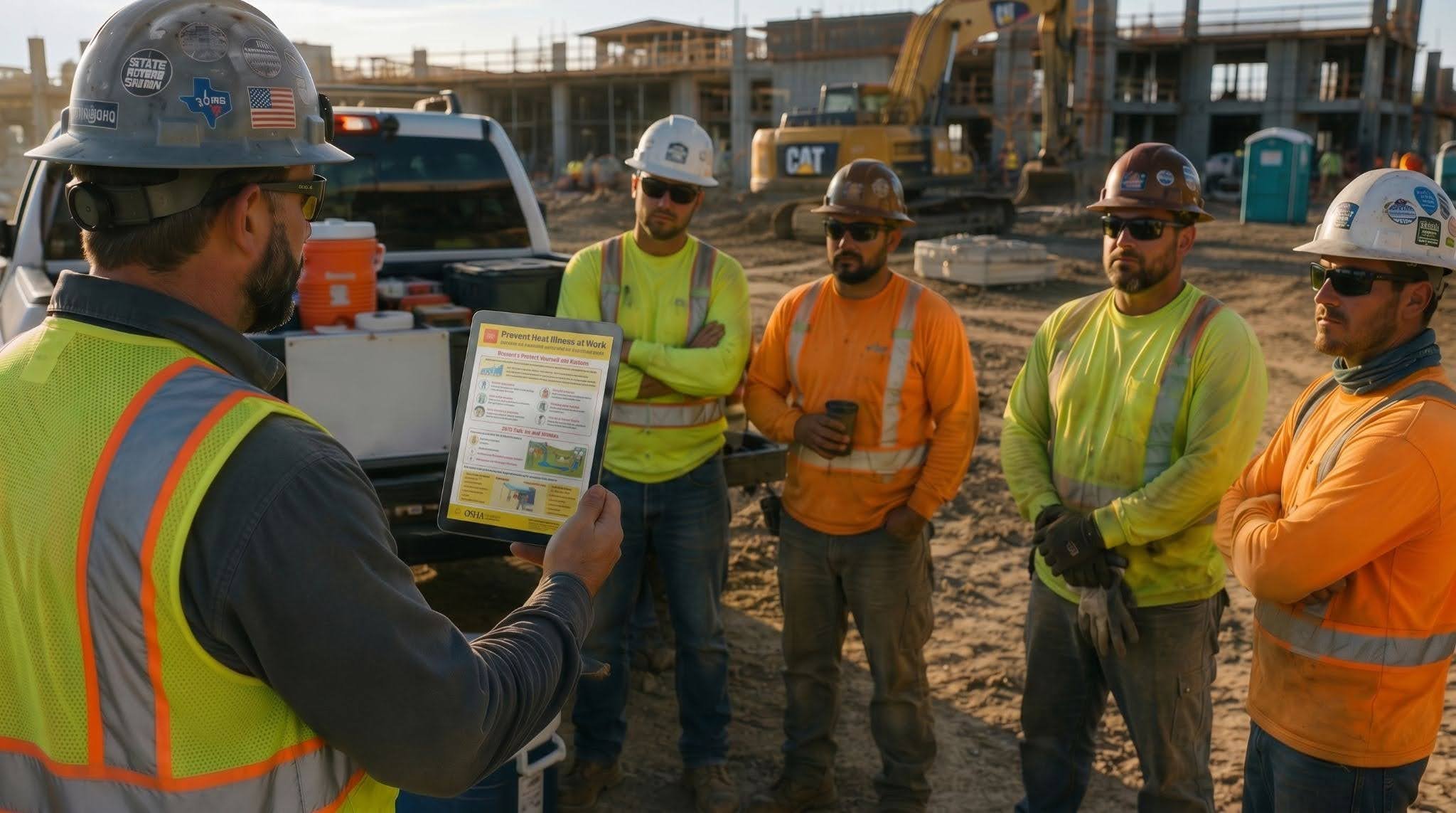
Strong safety programs should include documented heat safety training, toolbox talks, and ongoing communication that can be delivered consistently across crews and jobsites. Digital training systems can help companies track attendance, collect acknowledgments, maintain records, and ensure employees receive consistent messaging throughout the summer months.
For contractors managing multiple crews or bilingual teams, having centralized training records can make a huge difference during an audit or inspection.
6. Track Heat-Related Incidents & Near Misses
Not every heat-related issue turns into a hospitalization — but every incident is an opportunity to identify gaps before something more serious happens. OSHA inspectors are now reviewing injury logs, employee complaints, ambulance transports, and other records tied to heat-related illnesses during inspections.
Strong safety programs should include clear processes for documenting heat-related illnesses, dehydration cases, symptoms, and near misses while details are still fresh. Photos, witness statements, corrective actions, and supervisor notes should all be documented and easy to retrieve if needed later.
This not only improves internal investigations but also demonstrates that the company takes heat-related events seriously and responds proactively when issues arise.
7. Assign & Track Corrective Actions
Identifying hazards is only half the battle. OSHA also wants to see what companies are doing to fix problems once they’re discovered.
If an inspection reveals missing shade, inadequate water access, or crews working excessive hours in dangerous temperatures, companies should have a process for assigning and documenting corrective actions quickly.
Strong safety programs create accountability by ensuring hazards are tracked through resolution. Digital safety tools can help supervisors assign follow-up actions, track completion status, attach photos, and document when issues were resolved.
That documentation becomes extremely important during inspections because it helps demonstrate that identified hazards were addressed in a timely and consistent manner.

8. Keep Everything Centralized & Inspection Ready
The biggest challenge for many contractors isn’t necessarily the lack of safety efforts — it’s the lack of organized documentation when OSHA comes calling.
Paper forms get lost. Toolbox talks stay in trucks. Training records sit in filing cabinets. And when an inspection happens, companies scramble to piece everything together.
Strong safety programs centralize inspections, training records, observations, incidents, corrective actions, and supporting documentation in systems that can be easily accessed when needed. This makes it easier for safety managers to stay organized, identify trends, and demonstrate consistent oversight across projects and crews.
Because in today’s environment, it’s not enough to simply say your company takes heat safety seriously. OSHA expects companies to prove it.
Heat Safety Is Becoming a Documentation Issue
OSHA’s increased focus on heat safety isn’t just a temporary summer campaign — it’s part of a much larger shift toward proactive enforcement and documentation around worker protection. Construction companies should expect more scrutiny around hydration, shade access, training, acclimatization, JSAs, and how heat-related hazards are being managed in the field every single day.
The contractors who will be in the best position during an OSHA inspection won’t necessarily be the ones with the biggest safety departments. They’ll be the companies that can clearly show consistent processes, active oversight, employee involvement, and documented follow-through when hazards are identified.
Whether through inspections, JSAs, observations, training, incident reporting, or corrective action tracking, strong safety programs create accountability, improve communication, and help crews stay safer during extreme heat conditions.
As temperatures rise and enforcement continues to ramp up, now is the time for contractors to start evaluating whether their current heat safety processes are truly inspection-ready.
Two AlignOps solutions are specifically designed to help contractors put the 8 steps outlined above into practice: AlignOps SafetyReports and BusyBusy’s Safety Module. From inspections and JSAs to training, observations, incident reporting, and corrective action tracking, both platforms help contractors create stronger, more consistent safety processes while improving OSHA inspection readiness. Reach out to learn how these tools can help your team strengthen heat safety efforts before the next high-heat day arrives.

.png?width=960&length=960&name=ultimate%20guide%20to%20construction%20certificate%20tracking%20(1).png)