
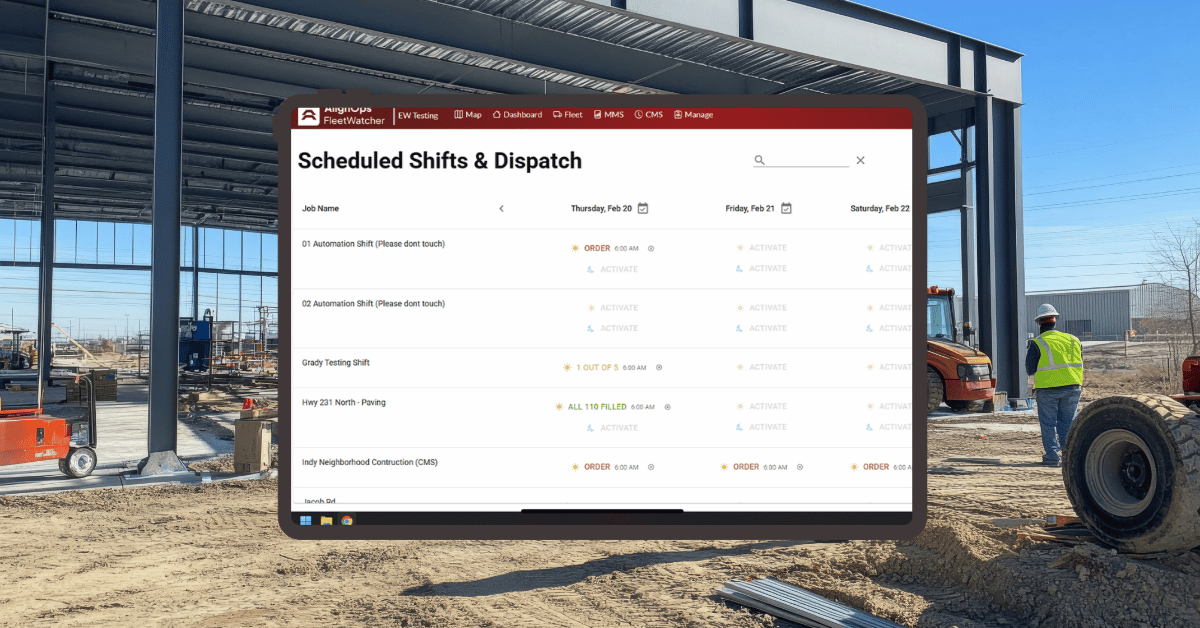
On January 15, we’re rolling out an updated FleetWatcher Dispatch experience for all customers. You’ll find it in the Dispatch dropdown menu, labeled New Dispatch—and it’s designed to help teams plan smarter, move faster, and stay in control.
One Hub for Total Dispatch Control
The New Dispatch experience brings scheduling details, asset fulfillment, equipment requests, and messaging together in one centralized location. With an improved job search and significantly faster performance, Dispatch now supports the pace and complexity of real-world operations—without the friction.
Why Dispatch Precision Matters
Poor asset coordination can be costly. Too many trucks arriving at once creates bottlenecks at plants, quarries, and jobsites. Too few trucks can stall production, push projects behind schedule, and risk penalties. Missed cadence disrupts material flow, and unclear truck status leads to miscommunication and last-minute scrambling.
The New Dispatch experience is built to eliminate these challenges by giving teams real-time dispatch intelligence and complete shift visibility.
Smarter Resource Allocation, Built In
With New Dispatch, you can:
- See all scheduled jobs in one place—orders, fulfilled requests, and pending assignments—creating a single source of truth for logistics, field teams, and drivers.
- Align resources clearly, using job KPIs to quickly identify which jobs are fully staffed and which need attention.
- Track broker and hauler performance at a glance, reinforcing accountability and rewarding reliability.
- Adapt instantly to change, with fast edits and real-time updates that keep everyone aligned.
From planning to execution, Dispatch gives you end-to-end visibility to improve efficiency, responsiveness, and accountability across operations.
Plan Ahead. Execute with Confidence.
The New Dispatch feature empowers your team to schedule ahead, request the right number and type of trucks, and manage cadence to match production needs. Every action from ordering and assigning to fulfilling or rescheduling is just a click away.
The result? Better coordination, stronger production rates, and a more efficient fleet.
.png?width=960&length=960&name=What%20is%20a%20dvir%20%20(1).png)